
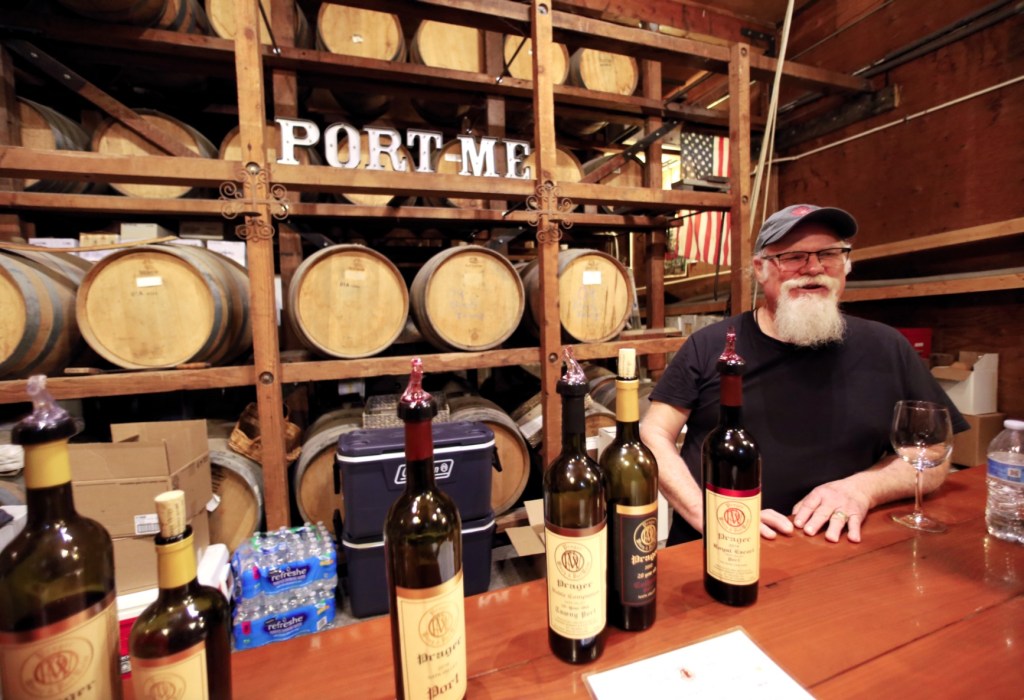
Jeff Prager, general manager of Prager Winery & Port Works in St. Helena, says it’s been a family business since the winery opened in 1979. 
The walls and ceiling of the old tasting room at Prager Winery and Port Works is festooned with decades of U.S. and foreign currency, a fun ritual among visiting customers. 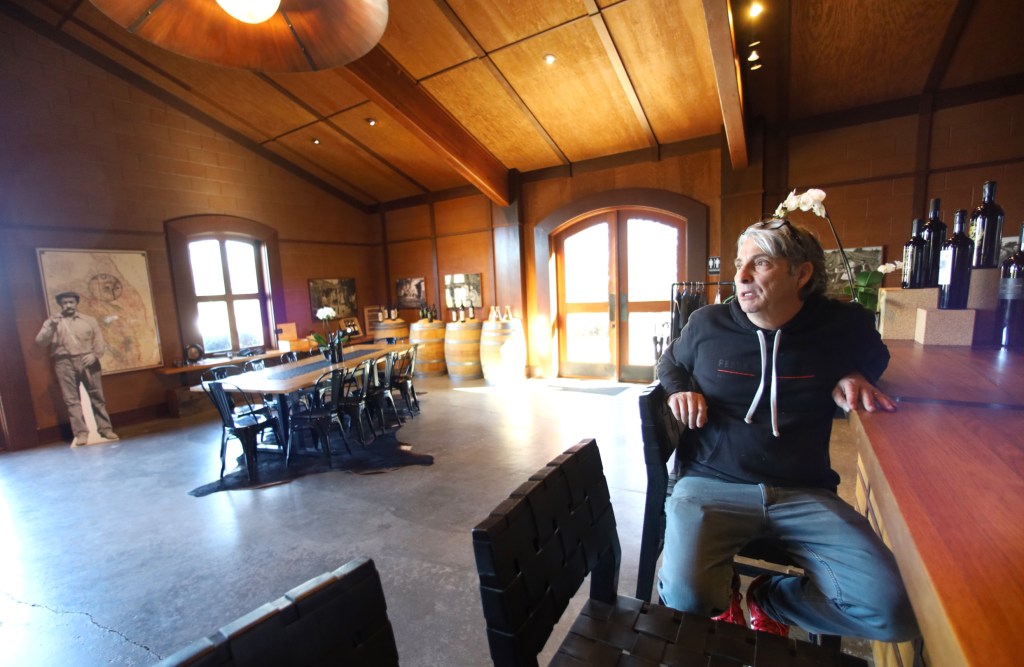
Greg Pestoni, general manager of Prestoni Family Estate Winery in Rutherford, says his family has been some a part of Napa Valley growing and winemaking since his great-grandfather opened a winery in 1892. 
Shelves at Napa Valley Olive Oil Manufacturing are packed with thousands of imported and locally made goods, including the company’s signature extra virgin olive oil. 
Imported Spanish olives are among the thousands of products that line the shelves at Napa Valley Olive Oil Manufacturing in St. Helena. 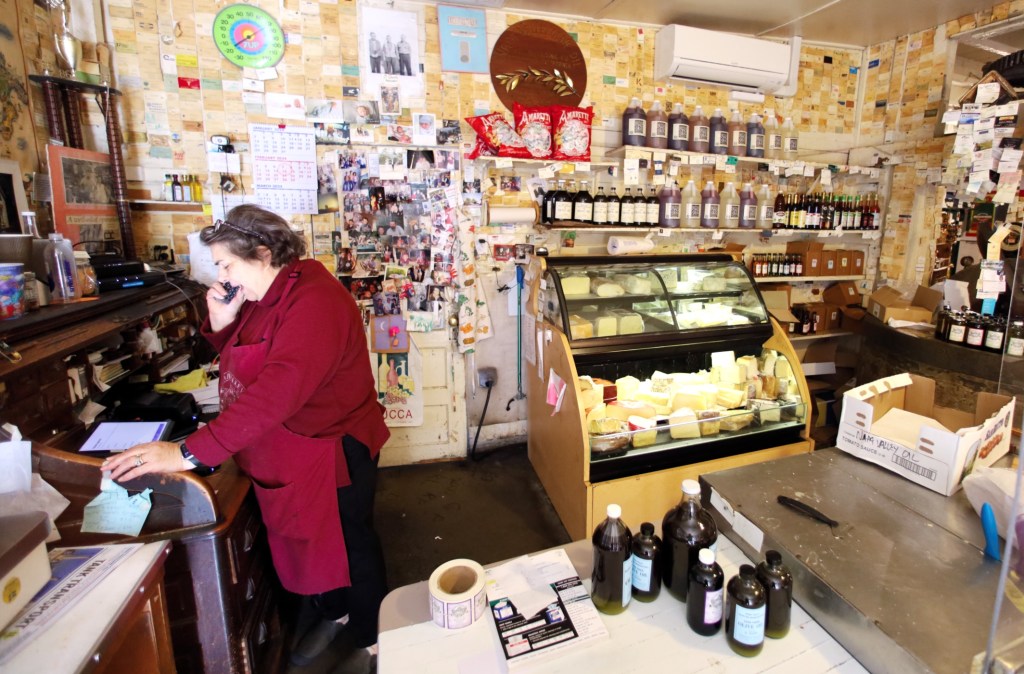
Narcisa Lucchesi has been working at the family owned Napa Valley Olive Oil shop in St. Helena for 49 years. The shop started in the 1930s as an outpost for an Italian grocery in San Francisco’s North Beach neighborhood. 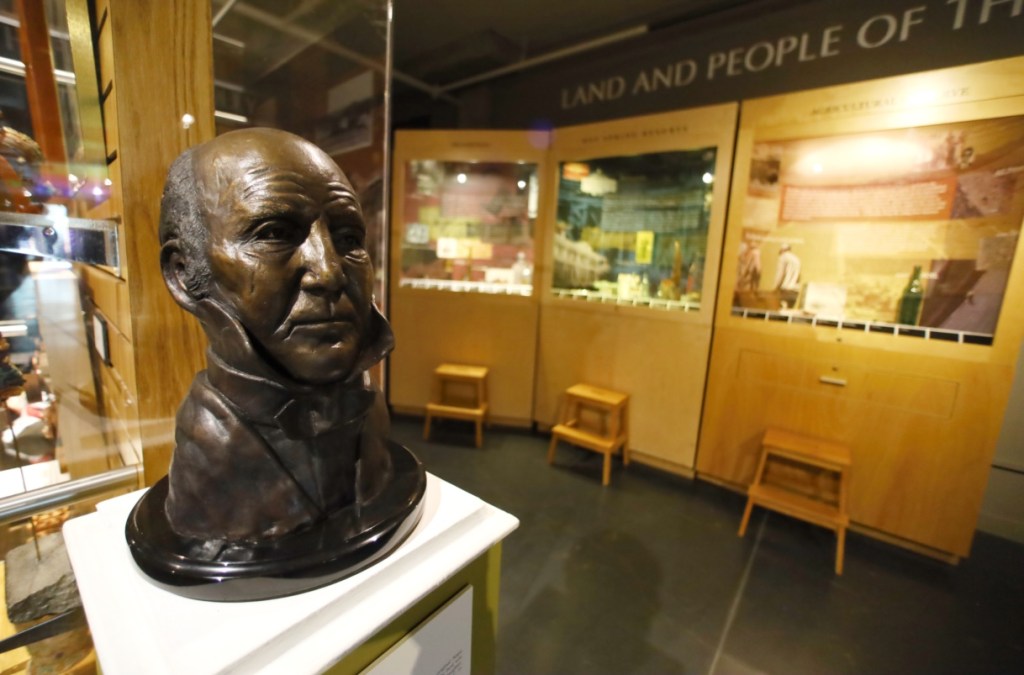
A bust of Napa Valley pioneer George C. Yount is the centerpiece for and exhibit on the region’s history at the Napa Valley History Museum in Yountville. 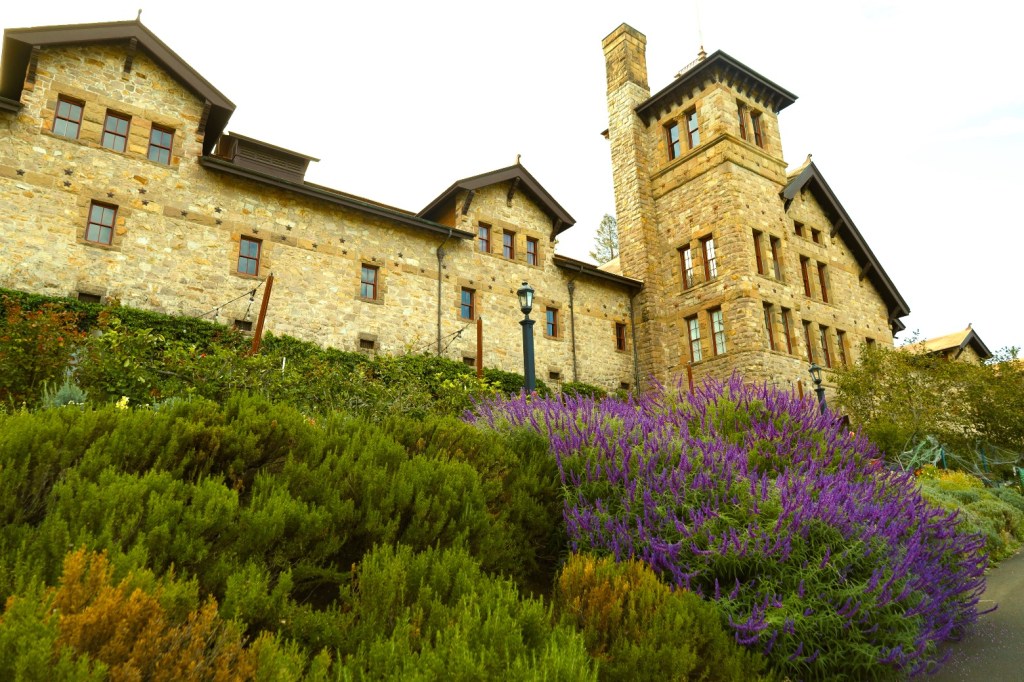
The Culinary Institute of America at Greystone is housed in an 1882 chateau that once housed Christian Brothers winery. 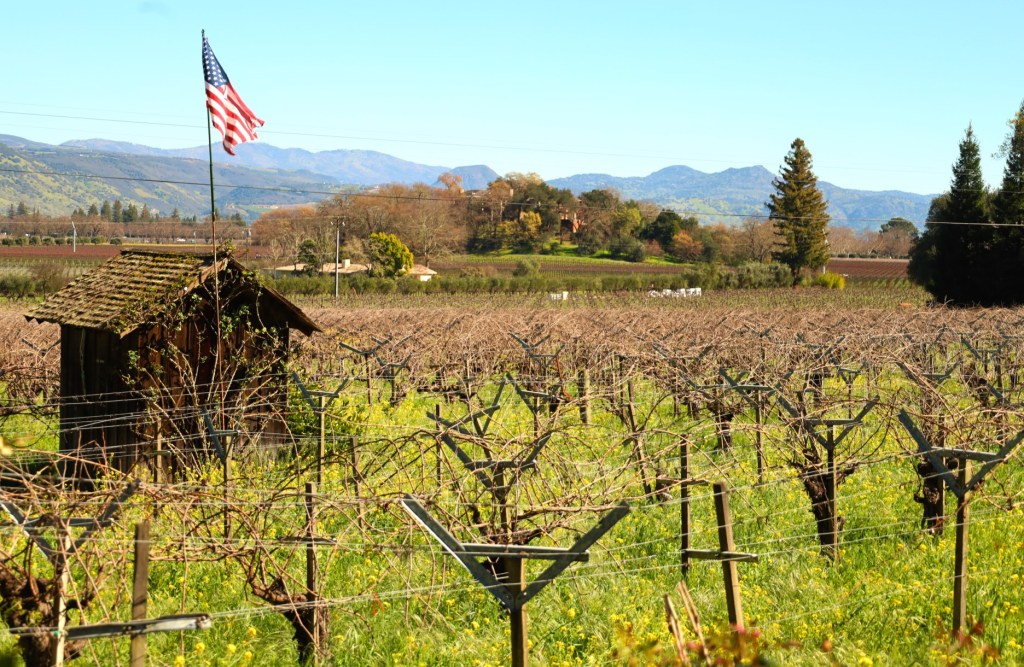
Vineyards at Tres Sabores winery near St. Helena in the Napa Valley. 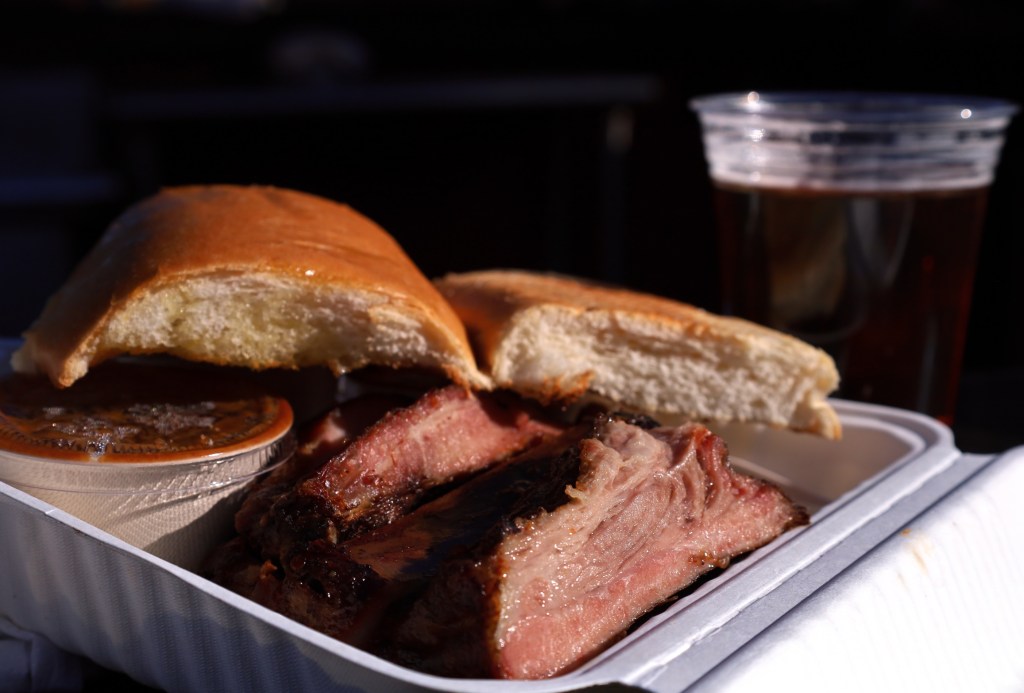
The four-pork-rib meal at Buster’s Original Southern BBQ in Calistoga. 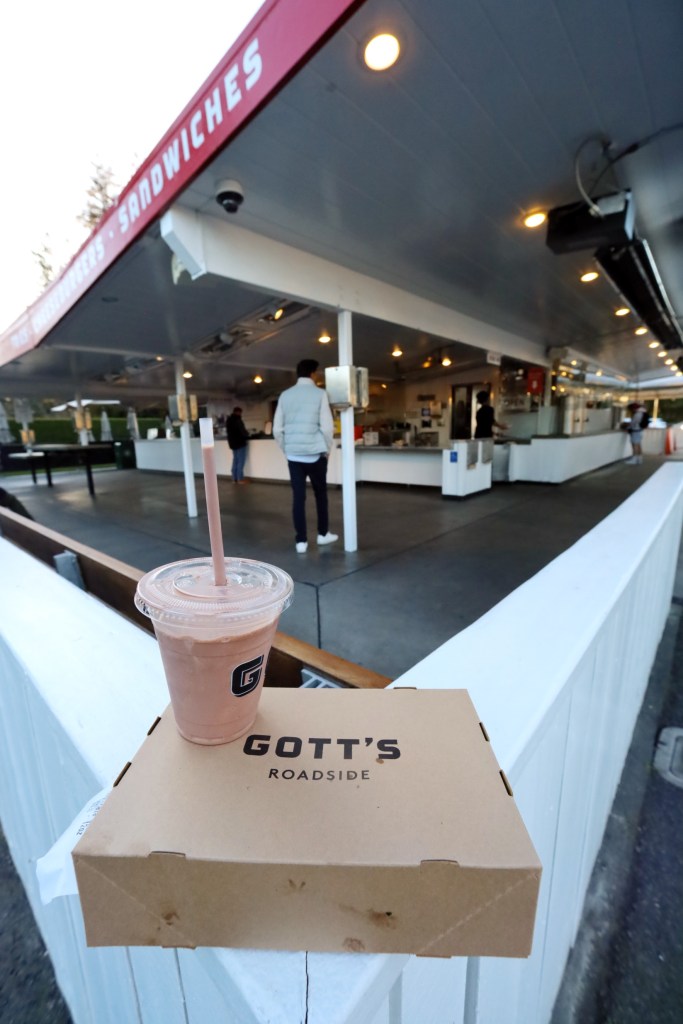
Opened in 1949 at Taylor’s Automatic Refresher, Gott’s Roadside has maintained the roadside, drive-up diner vibe, but has added Napa-style with fine wines and craft beers on the menu. 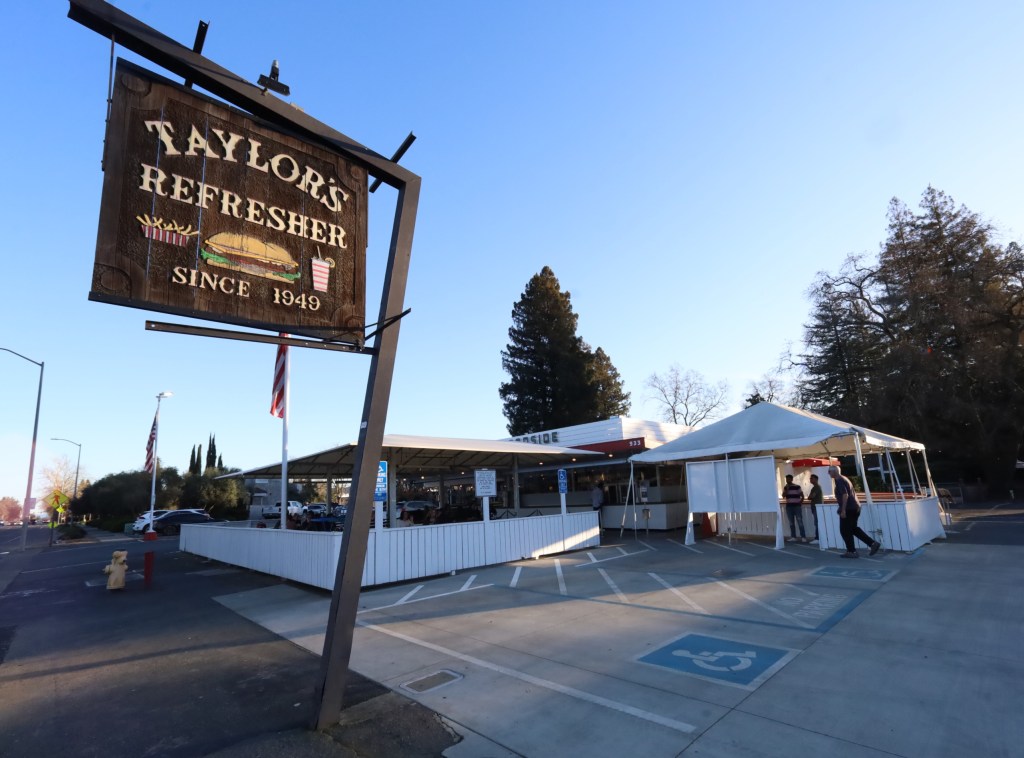
Opened in 1949 at Taylor’s Automatic Refresher, Gott’s Roadside has maintained the roadside, drive-up diner vibe, but with fine wines and craft beers on the menu.
In Search of Vintage Napa Valley
Spud Hilton
Food Trail Traveler
In a valley where more than 500 wineries are vying for attention, I was surprised there weren’t signs posted along the country road pointing the way to Tres Sabores — even when the narrow street turned into a one-lane road, and then into a dirt road. Climbing the winding route into Napa Valley’s western hills, it seemed that the dirt road had turned into little more than a goat path.
Then, suddenly, there were goats. I got out of the car and a black-coated baby the size of a chihuahua skittered up and bonked its furry head against my ankle.
I’m pretty sure this type of thing doesn’t happen at French Laundry.
Yes, the Napa Valley has changed. During the past half century, the region has journeyed from laid-back, rural grape-growing and ranching territory to pilgrimage site for wine and food lovers seeking Michelin-starred restaurants, high-end shopping and contemporary design-driven tasting rooms. But what about the past, before wines were big business?
Which is how I came to be navigating past a toy-size farm animal at a winery near St. Helena, taking in the pastoral, less-refined landscape that has become the exception here, not the rule. The goal was to follow a path up the linear valley to answer the question: In a region where vintage is everything, can you still find a vintage version of the Napa Valley?
Napa Valley’s longer history can only be described as “Fifty Shades of Grape.” What started in the 1800s as sparsely populated farmland for grape-growing among a few families and a handful of friars evolved into a locale for high-quality vineyards and, eventually, wineries. In his nonfiction travelog “Silverado Squatters,” Robert Louis Stevenson, author of classics “Treasure Island” and “Dr. Jekyll and Mr. Hyde,” wrote that “wine in California is still in the experimental stage,” but that “the smack of California earth shall linger on the palate of your grandson.”
The region went through waves of change, including Charles Krug opening the first winery in 1861; a losing battle with the vine-killing phylloxera virus; a nearly complete shutdown during Prohibition (the friars were still able to make Sacramental wine); and at least one era when vineyards producing grapes were far outnumbered by orchards producing prunes.
The moment that led to the Napa Valley of today is often attributed to the “Judgment of Paris,” when in 1976 a Chardonnay from Chateau Montelena and a Cabernet Sauvignon from Stag’s Leap Wine Cellars, both in Napa Valley, beat out the best wines of Bordeaux and Burgundy in a blind tasting in France. It drew international attention — and, eventually, investors — to what had been a simple Northern California farming region. (The competition and a 1970s-era Napa Valley are the backdrop for the 2008 film “Bottle Shock.”)
By the mid-1990s, the economic boom and modernization of the Napa Valley was in full bloom, drawing what would eventually be millions of visitors annually for “tasting-tourism.”
Legitimately pre-Neo Napa
One of the Napa Valley’s most revered legacy businesses isn’t about the wine. Napa Valley Olive Oil Manufacturing is, arguably, equal parts Italian grocery, olive oil factory and time machine.
The shop in St. Helena, a couple of blocks off Hwy. 29, resides in a 19th century white, wooden barn that hasn’t changed much since the 1930s when it opened as a remote outlet of an Italian market in San Francisco. The shop, owned by several generations of the Particelli family, carries all manner of products imported from Italy, as well as the company’s signature extra virgin olive oil that, like the shop and the ownership, hasn’t changed significantly for nearly a century.
Once I got used to the no-frills decor — concrete floor, exposed beams and decades of business cards tacked to every available inch of the walls — I was overwhelmed by just how many imported and local products filled every table, shelf and counter. The garage-sized shop carries “prosciutto, salami, sausages, breads, cheeses, peppers, wine, and pastas imported from Italy,” according to the owners. And that’s just a fraction of the stock.
At the helm when I walked in was Narcisa Lucchesi, who hails from the Lucca region of Italy and has been working for Napa Valley Olive Oil for 49 years. Lucchesi is the Italian “Nonna” you always wanted. She lights up when customers come in through the ancient, battered screen door and is quick to offer cheerful guidance about any of the several thousand products, from golden hunks of asiago cheese to fresh slabs of focaccia.
Lucchesi is quick to share the history, including how a family cousin who ran the original shop did favors for Italians in the Napa Valley who couldn’t get authentic Italian cheeses and salamis.
“He would bring cheese and salami for his own use, so people would come for the oil and they’d say ‘Oh, next time could you bring me some cheese,’ and he kept on doing that and made a little money out of it,” she said. “But then at one point he decided ‘Why don’t I just carry it in the store?’ and that’s when the store really took off.”
A few miles past St. Helena, Schramsberg Vineyards offers two layers of significant history from before the valley became a major magnet for money and visitors. First, Jacob Schram was among the original winemakers in the Napa Valley, mostly crafting Champagne-style bubbly at a time when the region was still considered “experimental.” In Stevenson’s “Silverado Squatters,” he talks about spending an entire day with Schram, tasting every varietal and vintage the winery had to offer.
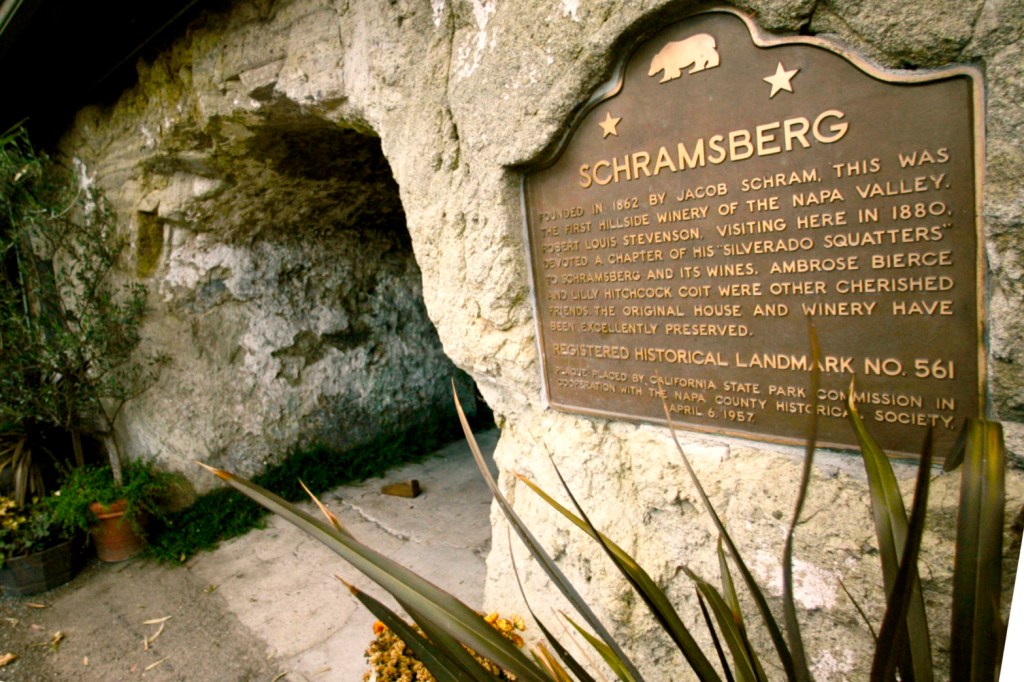
The winery hit hard times and was abandoned for a portion of the 1900s, until Jack and Jamie Davies bought it in 1965 and gave it new life. The Schrams’ original Victorian mansion and the caves that Jacob used for aging and storing his bottles are still there.
At Gott’s Roadside, I was staring down a steaming slab of juicy, salty beef and dripping cheddar, neatly cuddled within a pillow-soft bun from which all the fixings and condiments appeared to be plotting an escape. It was enough to transport even the nostalgia-challenged traveler to a time when this was a comfy roadside stand for drivers on a dusty country byway. And the glass of 2021 Cabernet Franc on the tray was only slightly out of place — but worth it.
Gott’s Roadside, which first opened in 1949 as Taylor’s Automatic Refresher, a Highway 29 drive-up diner featuring burgers, side dishes and milkshakes, has modernized some since the old days, offering a full menu of fine wines and craft brews, as well as the more contemporary ahi poke tacos and kale caesar salad, to go with burgers and fries.
It walks a fine line between the pre-boom Napa Valley and today’s wine-centric destination, but most diners seem to be happy eating outdoors at a place that resembles something from the film “American Graffiti.” Since taking over in 1999, Gott’s has expanded around the San Francisco Bay Area, although always with the 1950s diner vibe intact.
A family affair
The guy behind the counter at Prager Winery and Port Works sported a ball cap with plenty of miles on it, a plain black T-shirt, a lavish beard and an extraordinary knowledge about ports. He seemed like a guy who spends more time moving barrels of port than pouring sips of it. Then he introduced himself: Jeff Prager.
With family businesses, you never know who you’re going to meet.
They didn’t all arrive at the same time, but most of Napa Valley’s pre-boom small wineries were started by families, many of who were just searching for a connection to the land and the grapes that might turn rows of vines into liquid gold. While many of those original wineries have sold out to larger companies over the years, there are still a few that carry on the laid-back, small-town vibe by keeping it in the family.
According to Prager, family-owned small wineries are among the last connections to an earlier era of the Napa Valley, before the cash overruled the craft. “It’s gone from an art, and then in the ‘80s you started getting the millionaires coming up and having someone custom crush,” he said. “And now the billionaires are building these big, fancy cathedral-type things, and it’s totally changed from art to a lifestyle to Rio de Janeiro.”
Prager Winery started after Jeff’s father, Jim, returned from a Napa vacation in 1974 and began dreaming of making wine. They opened the doors five years later. “My dad loved port, but he didn’t feel that anyone was doing it properly.”
After I tasted a few ports, including a 20-year-old bottle not on the menu that made me question reality, Jeff Prager showed me the old tasting room which, it turns out, offers a wealth of decor. Literally. Every square inch of space on the walls, ceiling, shelves and doors is festooned with currency, mostly thousands of $1 U.S. bills, but there’s also plenty of paper from as far away as Namibia and Vanuatu. “My dad let someone put their change on the wall one day, and now there’s money from anywhere in the world.”
It’s clear from Prager Winery’s longevity and the lack of a swanky tasting room — concrete floor, racks of barrels, plywood walls — that the port-maker’s loyal following is as much about the vibe as the vino. How many places like that are left in Napa Valley where you actually chat with the winemaker, I asked.
“There aren’t anymore. I miss those days. You’d know everybody. You could call someone on the phone,” Jeff Prager said. “Now it’s all corporate run and multinational and it’s all secret.”
Just up the road, I found a similar story at Pestoni Family Estate Winery, albeit with a little more polish and decor that isn’t covered with money. But there’s little doubt this is a family operation, says Greg Pestoni, general manager.
“When you call the winery, on the phone you get Amy Pestoni. When you talk to the winemaker back there, you get Andy Pestoni. The guy with the broom is me, Greg Pestoni, because I do everything that everyone else doesn’t.”
The tasting room feels more like a spacious living room, with a mix of contemporary style and a vintage vibe that comes from the leather furniture, simply designed interior in warm tones, and the straightforward, solid tasting bar. It helps that there are photos of all of the Pestoni generations that were involved in grape-growing before the winery opened in 1994, a little more than a century after Greg Pestoni’s great-grandfather started making wine in the Napa Valley.
“I look at it like we’re the neighborhood Italian restaurant that you get to go to, whereas somebody else may be a Ruth Criss (Steakhouse) and expand and repeat the formula on a larger scale,” Greg Pestoni said. “Our vineyards, we try to make them all speak for themselves. We let the vintages speak for themselves. We’re not trying to create a Big Mac over and over.”
And customers pick up on the casual, family vibe, he said. “You do it because it’s fun or just don’t do it. When it stops being enjoyable, I don’t know, what’s the point?”
New growth with the vintage vibe
It turns out Tres Sabores winery is nearly the antithesis of what Napa Valley’s Michelin-starred restaurants and ultra-luxe wineries represent. The family-owned estate seems to be a character in a book about an older version of this storied valley, when there were more actual cows than cash cows.
At the end of the dirt driveway at Tres Sabores, past exceptionally polite “No Parking” signs, I met Mary Beth McGrath. I said I didn’t have an appointment, but was looking for examples of the Napa Valley the way it once was.
“Let me get you some wine,” she said, making it abundantly clear that I was in the right place.
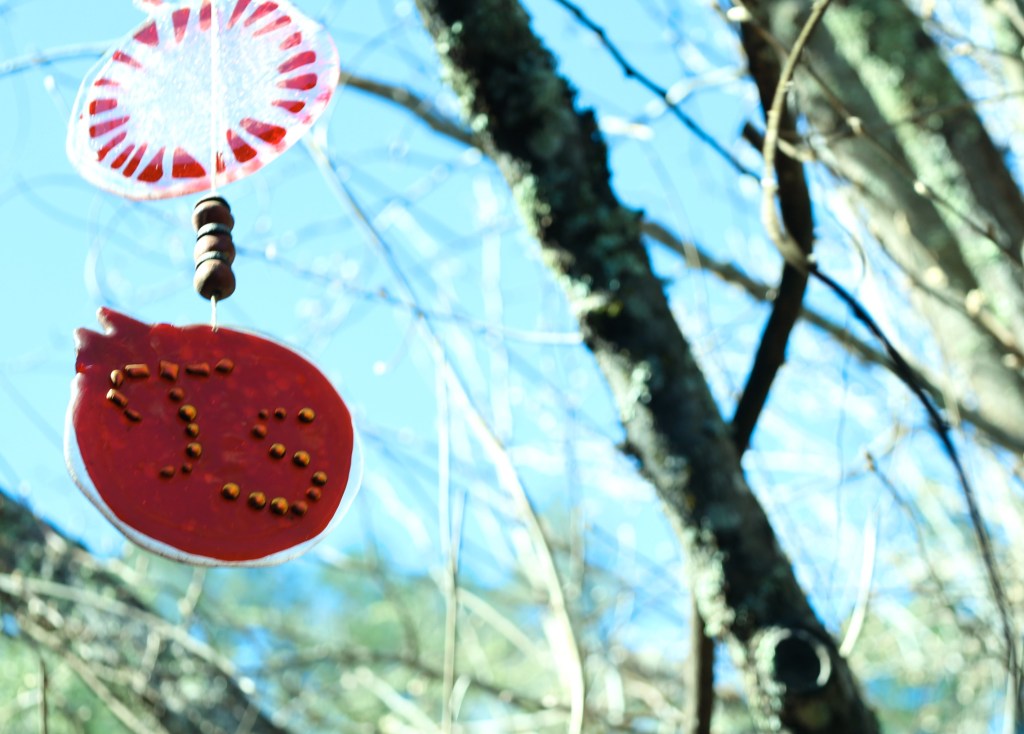
Owner Julie Johnson, one of the first of the women winemakers to embrace organic and sustainable farming in the valley, opened Tres Sabores in 1999, and infused it with a down-home attitude, says McGrath, the winery’s hospitality manager. “Kind of more of a sense of ‘Welcome to our home. Welcome to a place where you can relax and enjoy some wine.’ ”
The tasting room and patio are more like a friend’s summer home than a place of business, with a simple wood-shingled cottage, clay art hanging from the trees, and weathered picnic tables at which customers sip, nosh and relax. Tres Sabores is one of a handful of examples of properties that didn’t exist in the pre-Neo Napa era, but that have embraced an ethos from simpler times.
McGrath, who was raised in St. Helena, says the laid-back, small-town vibe is a lot harder to find. “It’s really been within the past 10-15 years that it’s gotten to be a little more of a Disneyland for wine lovers.”
With that in mind, I sought out other Napa Valley landmarks that have blossomed amid the region’s boom, but that resemble an earlier era. Jeff Prager had said that Farmstead in St. Helena, for all its hip scene, reflects an homey vibe lacking in most other eateries. “The locals go there. It’s a nice place to sit outside and start with some beer and appetizers and then go have a meal.”
Farmstead at Long Meadow Ranch is a low-key, airy restaurant in a barn-like complex with an outdoor garden lounge and cafe that focuses on “American farmhouse cuisine,” showcasing ingredients from the farm, ranch, and vineyards owned by the Hall family. While the restaurant wasn’t here when 1970s winemakers were trying to get respect for California wines, the history of the farm and ranch reaches back to a land grant from then-President Ulysses S. Grant.
Another contemporary site with a deep past is the Culinary Institute of America at Greystone, a center for cooking classes, local wine history, and food and wine education that lives inside the 19th century stone castle that originally housed Christian Brothers Winery. A stop here is requisite, if only the Medieval castle ambiance, lunch at the Gatehouse Restaurant, and a visit to the gift shop for a conversation-starting hat emblazoned with “CIA.”
Up the road in Calistoga there were only three stops left on my trail, all of them within walking distance along Lincoln Avenue, the town’s main strip. Cafe Sarafornia, a folksy, small-town diner that has been around since before tasting-tourism exploded, offers up traditional breakfast and lunch fare, with a generous helping of local hospitality. (“Sarafornia” is a reference to the development and naming of Calistoga by California’s first millionaire, Sam Brannan. Legend has it Brannan intended to call the site the Saratoga of California, but might have been a bit tipsy when he told reporters it was the “Calistoga of Sarafornia.”)
Along the same block is Susie’s, a moderately divey bar on Lincoln Avenue where the blue-collar decor and strong drinks make it easy to forget the modern, wine-obsessed region just outside the door.
The last stop in Calistoga, however, is not the least: Buster’s. At a time when the “best” of Napa Valley’s restaurants, bistros and trattorias are serving 6-10 courses, each of which can be measured in grams and probably includes some form of flavor-infused foam, most menu items at Buster’s Original Southern BBQ are measured in pounds, and the only foam is topping your pint of lager.
Charles “Buster” Davis grew up with generations of Louisiana cooking influences, eventually opening a barbecue joint in Southern California in 1965. While he’s only been in Calistoga since the 1990s, he and his particular alchemy with pork, beef, chicken and all the fixings has become a beloved fixture in town. (The no-frills restaurant doubles as a music venue throughout the year.)
My tray was piled high with pork ribs, smoky chili beans and tangy potato salad, so I grabbed a pint of Buster’s IPA and pulled up a barstool at the outdoor counter next to the grill and smoker. There’s something about the unpretentious cafe with a no-frills order window, the smell of the smoky, salty ribs, the picnic tables, and the tree- and grass-covered hillsides behind Buster’s that washed away all thoughts of the modern, hip, corporate Napa Valley.
Eventually, I put down a thoroughly cleaned rib bone and raised my pint. Looking around to see if anyone was nearby, I quietly toasted to the neighborhoods, the winemakers and the locals who still put the old-fashioned “fun and friendly” in the valley.
Oh yeah, and the goats.
Spud Hilton is the editor for Food Trail Traveler and host of the Culinary Carpool video channel.
 Food Trail Traveler